In the world of paid digital marketing, it is surprisingly easy to get a bit too focused on clicks from platforms such as Google Ads, Microsoft Advertising or Instagram Ads.Some marketing teams will spend hours refining keyword lists, adjusting bidding strategies, testing ad content, and trying to stay in favour with the Google Ads algorithm.
However, any paid click is only an invitation to your website, and is an expense rather than guaranteed revenue.
What happens after a user clicks on your paid ad will determine whether that expense transforms into a return on investment (ROI) for your online business. This is where post-click optimisation becomes important for anyone managing a website. If you are driving targeted, high-intent (and potentially, expensive!) traffic from Google Ads to a generic homepage or a slow-loading landing page, you can end up effectively paying for an increased bounce rate, rather than new customers.
Improving your website for user actions can provide potential customers with a better user experience and journey all the way from ad click through to your checkout or enquiry form.
What Exactly is Post-Click Optimisation?
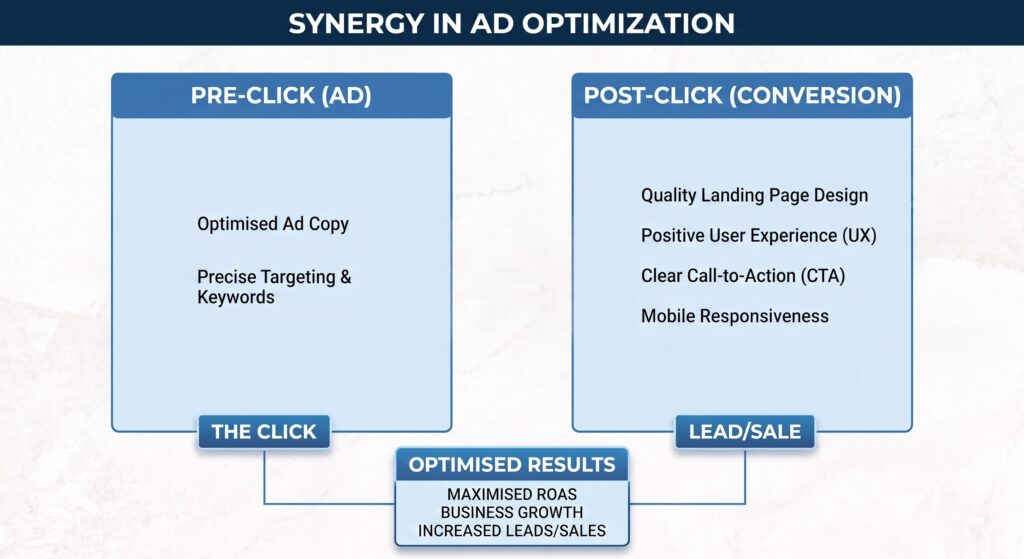
Post-click optimisation (PCO) is the process of matching the user experience on your website with the actual intent behind the ad they clicked. While regular Conversion Rate Optimisation (CRO) looks more broadly at improving a website’s overall performance from all traffic sources, PCO stays focused on the route a paid visitor takes when arriving on your website. The primary goal of PCO is to remove as much friction as possible between user expectation (created by your ad) and reality (provided by your website).
When a user clicks an ad, they will usually have a specific need or problem they want solved, ideally as soon as possible. If your landing page ends up forcing them to search through navigation menus or read walls of unrelated text, they will likely leave rather than convert. By refining everything from page load speed to on-page content, PCO can help so that your ad spend results in actual conversions, rather than expensive website visits that end up bouncing.
4 Methods of Post-Click Optimisation
To successfully implement post-click optimisation for your online business, you need to look at your landing pages from the view of your targeted users in Google Ads. Understanding how a potential customer customer thinks and what they expect is key, and can implemented with the following methods:
- Match the content of your Google Ads: If your Google Ad promises a product such as “Men’s Designer Sports Trainers” but your landing page header reads “Men’s Clothing” you have broken the chain of intent. While the landing page still has relevancy, it’s not what the user would have been expecting. The headline and main offering of your landing page should directly reflect the language and keywords used in your paid ads.
- Increase page speed and reduce loading times: Paid traffic from any source is generally impatient. A delay of even a couple of seconds in page speed can cause bounce rates to jump up dramatically. If your website’s technical setup causes a paid user to wait for large images, videos or slow background scripts to load, you could be throwing your ad budget away before they even get to see your offer.
- Include a clear Call to Action (CTA): Unlike a regular blog post which provides information and links to other pages on the website, a dedicated PPC landing page should only have one main goal. Whether it’s downloading an e-book, booking a consultation, or completing a purchase, keep the user focused on that particular goal. Provide the information that they would need on the page itself, even if that means expanding some of the content and including FAQs to prevent them needing to look elsewhere on your website.
- Immediate Trust and Credibility: Because PPC ads often introduce your brand to completely new customers and audiences, you should be able to establish trust instantly. This means placing social proof, such as client testimonials, case study snippets, or industry certifications, above the fold where it is immediately visible without scrolling. For example, on specific product pages this could include brand logos and clear messaging such as “Official Retailer” or “Official Partner” to immediately provide authority as a seller.
By implementing some or all of these methods, depending on what you’re actually offering, you can provide users with the route from your ad directly to your conversion goals.
The Hidden Impact on Your Quality Score
Implementing post-click optimisation doesn’t just improve your conversion rates from paid ads; it can also have a positive impact on your actual Google Ads account.
Google’s Quality Score formula relies heavily on what they call “Landing Page Experience”. In short, Google wants to ensure that when its users click on a Google Ad, they are directed to a helpful, fast, and relevant destination (as this also impacts Google’s reputation for providing relevant results).
When the post-click experience of your website is highly optimised, users spend more time on your website and interact more with your landing page content. Google recognises this positive user behaviour, rewards your Google Ads campaign with a higher quality score which subsequently lowers your average cost per-click (CPC). By adjusting your website for a better experience, you can actually make your advertising cheaper in the long run.
How to Audit Your Own Post-Click Experience
If you suspect your Google Ads campaigns are suffering from a poor post-click journey, you can begin auditing your website landing pages by asking yourself a few questions:
- Does the page load in under 3 seconds when using mobile data? Use tools like Google PageSpeed Insights or GTMetrix to check your Core Web Vitals and what might be impacting your page loading times.
- If a user reads only the top headline, do they know exactly what is being offered? Keep it clear, bold, and directly relevant to what the ad itself is actually offering.
- Is the enquiry form too long? When it comes to enquiry, lead and contact forms, every extra form field you require introduces friction and drops conversion rates. Only ask for what you require to qualify the lead.
- Are there too many distractions? Check if sidebars, unrelated links, or pop-ups are getting in the way of the primary CTA, especially for a dedicated paid ads landing page.
Get the Most Value Out of Every Click
Between paid ads and search engine optimisation, driving traffic to your website is only half the battle for any online business. If you want to start getting more out of your marketing budget and start scaling your website’s digital performance upwards, test shifting your focus to what happens after the click and monitor for performance improvements.
By treating your ads and your website as a system that works together, you create a seamless user journey that builds trust, lowers your advertising costs, and turns even casual searchers into valuable customers. If you need help with PPC ads management or would like a review of your own website, get in touch with us today.